
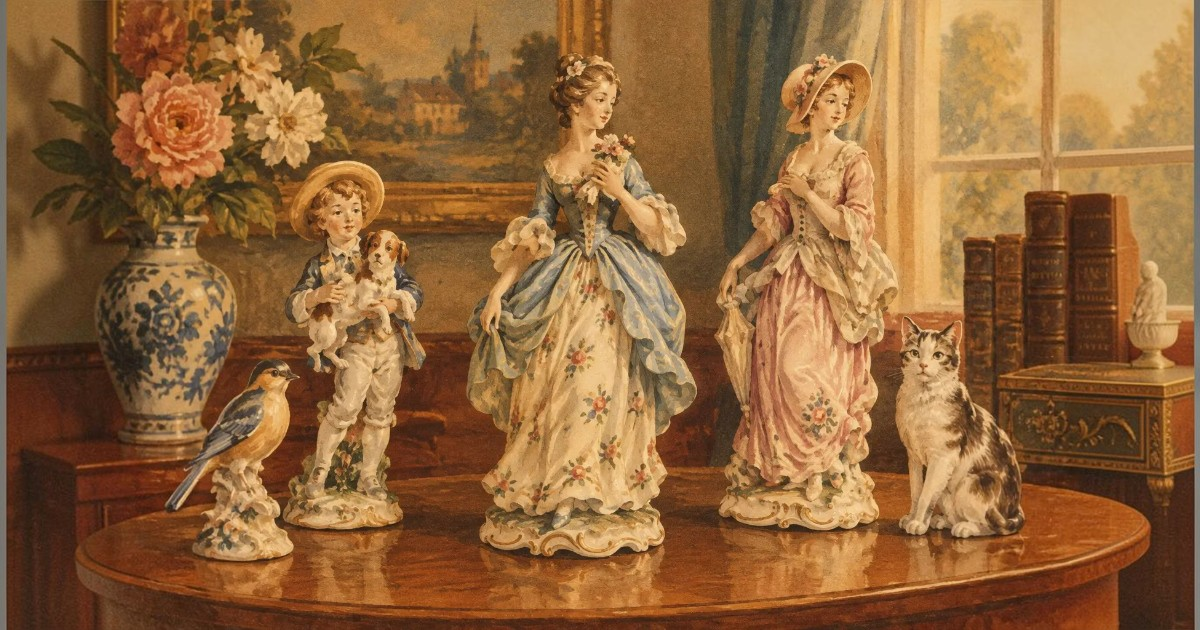
Some antique porcelain figurines announce themselves at once - a lace-trimmed skirt, a gilt-edged base, a hand-painted face with just enough expression to feel alive. Others are quieter pieces, the sort you notice slowly on a mantel or shelf, and then cannot stop thinking about. That is part of their lasting appeal. They are decorative objects, certainly, but they are also small records of taste, craftsmanship, and domestic life.
For collectors and vintage decorators alike, antique porcelain figurines offer a rare combination of beauty and intimacy. They do not take up much space, yet they can change the mood of a room. A single well-chosen figure can add softness to a bookcase, formality to a china cabinet, or a little theatrical charm to a side table. And because these pieces were made across different countries, factories, and eras, there is real variety to collect.
Why antique porcelain figurines still appeal
Part of the attraction is visual. Porcelain captures detail in a way that feels almost improbable - folds in fabric, petals on a hat, curls of hair, delicate fingers, tiny instruments, ribbons, baskets, and flowers. Even modest figures often have a refinement that newer reproductions struggle to imitate.
But the appeal is not only decorative. Antique figurines carry the sensibility of the period that produced them. Victorian and Edwardian examples often lean romantic or sentimental. Earlier continental pieces may feel courtly, pastoral, or mythological. Later examples can reflect changing domestic tastes, with cleaner lines or sweeter nursery themes. When you collect them, you are collecting more than an object. You are collecting a style of seeing the world.
That emotional pull matters. Many people are drawn to figurines because they remember them from a grandparent's curio shelf, a holiday display, or a formal dining room that was never quite everyday space. Antique porcelain figurines can feel personal in that way. They are often tied to memory long before they become tied to market value.
What makes a figurine antique
In the strictest sense, an antique is generally at least 100 years old. That definition is useful, but in the figurine world, the line is not always simple in practice. Many shoppers use antique and vintage interchangeably, especially when discussing decorative porcelain from the late 19th to early 20th century.
If you are buying for collecting purposes, age matters, but so do origin, condition, and authenticity. A figure from the 1920s may not meet every antique standard, yet it can still be highly desirable if it is beautifully modeled, well marked, and representative of a respected maker. On the other hand, a truly old figurine with heavy restoration or poor repainting may be less compelling than a later but cleaner example.
This is one of the first trade-offs collectors face. Do you want strict age, or do you want beauty, display presence, and integrity? Often, the best answer depends on whether you are building a collection, styling a room, or buying a gift with old-world charm.
Makers and origins collectors often look for
When people first begin shopping for antique porcelain figurines, they often start with country of origin or manufacturer marks. German factories, especially those associated with Dresden, Meissen, and the broader Thuringian region, remain especially sought after. French porcelain has its own elegance, and Austrian and Bohemian examples appear regularly in decorative collections as well.
English porcelain figurines also have a devoted following, particularly among collectors who appreciate pastoral themes, literary scenes, and refined domestic subjects. Some makers became known for highly detailed lace figurines, while others excelled in neoclassical forms, cherubs, religious subjects, or animal studies.
That said, marks can be confusing. Factories changed ownership. Similar motifs were copied. Some export pieces carry decorator marks rather than factory marks. Others are simply unmarked. A mark can help, but it should never be the only thing you trust. The quality of the porcelain, the sharpness of the modeling, the style of the base, and the hand-painted finish often tell just as much.
Subjects that remain collectible
Certain subjects return again and again because they display well and feel timeless. Dancers, courting couples, children, musicians, shepherdesses and cherubs have all held long appeal. Animal figurines, especially birds, spaniels, poodles, and lambs, also remain popular because they fit easily into both formal and relaxed interiors.
Collectors tend to favor pieces that feel specific rather than generic. A figurine with an expressive pose, unusual costume, or finely painted face often stands out more than a larger but less skillful piece. Scale can matter, but character usually matters more.
How to tell if a porcelain figurine is old and well made
The first thing to examine is the modeling. Older figurines with quality workmanship usually have crisp details rather than softened edges. Facial features should feel deliberate. Hands, flowers, and drapery should have shape and movement instead of looking melted or vague.
Next, look at the paint. Hand-painted decoration tends to show subtle variation. Blush on cheeks, shading in garments, and fine linework in brows or floral decoration are all good signs. Gilding may show wear with age, which is normal. In fact, a little gentle wear often looks more reassuring than a piece that appears unnaturally bright from top to bottom.
Turn the figurine over if possible. The underside can reveal a great deal. Look for old marks, impressed numbers, glaze quality, and signs of age in the footrim. A base that is too clean, too white, or mechanically uniform can suggest a later reproduction. Still, this is not a rule without exceptions. Some well-preserved old pieces remain surprisingly fresh.
Condition matters, but not always in the same way
Condition is especially important with porcelain because fragile details are easy to damage. Chips, hairlines, repairs, missing fingers, broken petals, and restoration around necks or bases all affect desirability. For serious collectors, original condition is usually preferred.
Yet there is nuance here. A rare or especially beautiful figurine may still be worth buying with minor damage if the issue is disclosed and the price reflects it. Tiny flea bites on the underside are different from a repaired arm or overpainted face. If you are buying for display and love the piece, a small flaw may be perfectly acceptable. If you are buying for investment or a focused collection, you may want to be stricter.
Decorating with antique porcelain figurines
One reason these pieces remain easy to live with is that they do not require a formal period room. Antique porcelain figurines can sit comfortably among old books, brass candlesticks, framed prints, transferware, and floral china, but they can also soften a more edited space.
A single figurine on a stack of books brings warmth to a hallway table. A pair flanking a mantel clock creates a traditional look without feeling overdone. In a cabinet, figurines mix especially well with teacups, pressed glass, or small silver because they vary height and texture.
The best displays usually avoid crowding. Figurines need a little breathing room so their silhouettes can read clearly. Too many pieces packed together can make even lovely objects disappear into visual noise. A curated arrangement almost always feels richer than a full shelf.
Buying antique porcelain figurines with confidence
If you are shopping online or in person, ask practical questions. Has the figurine been repaired? Are there chips to flowers or fingers? Is the mark clear? Are measurements accurate? A careful seller should be able to describe both charm and flaws without hesitation.
Photographs matter too. You want to see the front, back, base, and any close details where damage is likely. Good antique buying is not about expecting perfection. It is about knowing exactly what you are getting.
This is where curation makes a difference. A thoughtfully sourced piece usually arrives with clearer context - era, maker when known, decorative style, and a realistic account of condition. That kind of straightforward presentation suits the object itself. These are small works of craftsmanship. They deserve more than vague labels and hurried listings.
For new collectors, the smartest approach is often the simplest: buy what you genuinely want to live with. Learn the marks over time. Notice what subjects keep drawing your eye. Pay attention to glaze, painting, and sculptural detail. Taste often becomes more refined through repetition.
Antique porcelain figurines reward patience. The right one may not be the rarest or the most expensive piece in the room. It may simply be the one with the right posture, the right palette, or the kind of old-fashioned charm that makes a shelf feel finished the moment it arrives.