
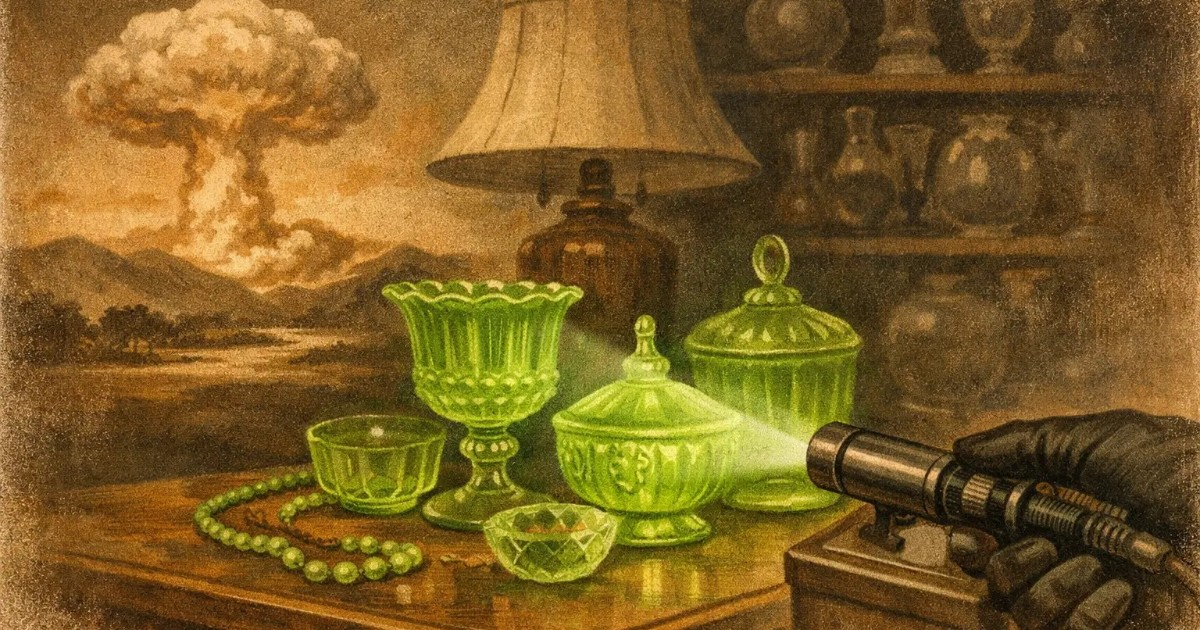
Between the late 1800s and the mid-20th century, glassmakers added a small amount of uranium oxide to molten glass as a colorant. This ingredient created rich, distinct yellow-green shades (often called "Vaseline glass" due to its resemblance to petroleum jelly).
The Difference Between Glow and Radiation
- The Radiation: Uranium naturally emits low-level ionizing radiation (mostly alpha particles, which cannot penetrate human skin).
- The Glow: The neon green glow is fluorescence, not visible radiation. Under a UV or black light, the uranium ions absorb ultraviolet energy and bounce it back as visible light. Turn off the UV lamp, and the glow stops immediately.
Keep in mind: A black light is a fun testing tool, but it isn't 100% foolproof. Other vintage materials—like manganese glass—can also glow under UV light. True identification comes down to color, mold patterns, era, and maker marks.
Is It Safe to Keep in Your Home?
For everyday display, intact uranium glass presents very little hazard on a shelf. The alpha radiation it emits only travels a few inches and is blocked by ordinary skin.
However, a few simple, common-sense practices will keep your collection completely safe:
-
Skip using it for food and drink
Avoid serving food—especially warm or acidic items like citrus, wine, or tomato dishes—in vintage uranium glass. While the risk from external radiation is minimal, you never want to risk leaching micro-particles or consuming glass from an aging, scratched surface. Enjoy them as display pieces instead!
- Never sand, drill, or grind it
Inhaling dust from any crushed or ground glass is dangerous, but inhaling dust containing uranium adds an unnecessary health risk. Never attempt to alter, drill holes in, or sand a piece of uranium glass.
- Handle broken pieces with care
If a piece chips or breaks, keep children and pets away. Put on disposable gloves, carefully pick up the fragments, wipe the area down with a damp paper towel to catch microscopic dust, and seal the broken pieces in a bag before disposal.
How to Style Uranium Glass
Before it became a black-light novelty, uranium glass was made for real, everyday life—appearing as dessert bowls, cake stands, vanity trays, pitchers, and candlesticks.
- In Natural Daylight: Place pieces on an open shelf, hutch, or windowsill where natural sunlight can catch the soft, saturated green or yellow tones.
- For a Cabinet Reveal: Install a small UV light strip inside a glass display cabinet or hutch. It creates a stunning, luminous focal point in a dining room or living space when turned on in the evening.
Quick FAQ for Collectors
Can uranium glass make you sick?
Not through normal handling and display. Health risks are tied to ingesting or inhaling radioactive particles (which is why you shouldn't eat off damaged pieces or generate glass dust).
Should a high Geiger counter reading scare me off?
Geiger counters are incredibly sensitive and will click rapidly even near weak sources. A click just confirms the presence of uranium; it doesn't mean standing near the cabinet is dangerous. Focus on condition, maker, and beauty instead!
How should I wash it?
Always hand-wash vintage glass using lukewarm water and mild dish soap. Dishwashers subject delicate vintage glass to harsh chemicals and extreme temperature shifts that can cause cracks.
The Takeaway
Uranium glass doesn't need to be feared, nor does it need to be hidden away. Give it the same thoughtful care you would give any delicate 100-year-old antique: keep it intact, display it securely where light can find it, and enjoy the magical piece of history sitting on your shelf.
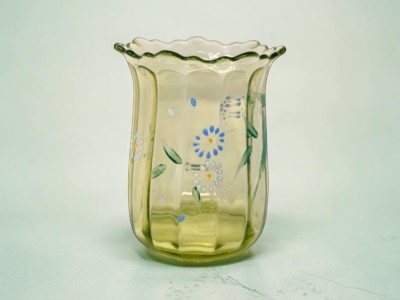
Pictured 1900s Beaumont Glass Uranium Glass Floral Vase EAPG
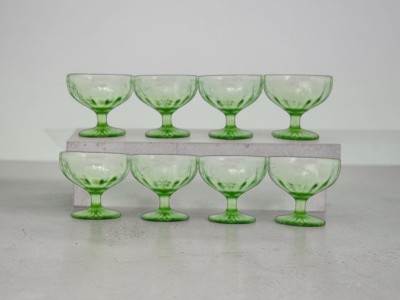
Pictured 1930s Hocking Glass Cameo Green Depression Glass Sherbet Glasses Set of 8
Do you want to know how Carnival Glass and Depression Glass Differ. Read about it here